Thursday, 6 October 2011

Treasures of Heaven

Elisha died, and they buried him. Now bands of Moabites used to invade the land in the spring of the year. And as a man was being buried, behold, a marauding band was seen and the man was cast into the grave of Elisha; and as soon as the man touched the bones of Elisha, he revived, and stood on his feet. (2 Kings 13:20-21) 
A woman had heard the reports about Jesus, and came up behind him in the crowd and touched his garment. For she said, "If I touch even his garments, I shall be made well." And immediately the haemorrhage ceased; and she felt in her body that she was healed of her illness. (Mark 5: 27-29; cf Luke 8: 43-48)
God did extraordinary miracles by he hands of Paul, so that handkerchiefs or aprons were carried away from his body to the sick, and diseases left them and the evil spirits came out of them. (Acts 19: 11-12)

Reliquary containing a Holy Thorn,
and depicting the Last Judgement.
14th century French
As it is good to get far away from the seminary on our days off, yesterday, I went to London to visit the Treasures of Heaven exhibition in the British Museum, just before it closes this weekend. There displayed are a variety of reliquaries, and associated items, from the early Church to the Reformation, tracing the ancient cultic devotion of the early martyrs, to the discovery of the true Cross by St Helena in the 4th century, to the excesses of the late mediaeval period. As we can see through these three passages from scripture, however, our understanding in 'relics' goes back much further than that.

Many of the reliquaries were empty, but all, of course, are still holy objects, made so by their use (including a whole ancient stone altar, with little stone-carved rouched curtains to allow the faithful to venerate the relics underneath it!), but some of the reliquaries still contained their original contents, including many pieces of the True Cross, and splinters from Christ's crown of thorns, a piece of St Thomas of Canterbury's skull, and clothing taken from St Cuthbert's tomb in the 19th century. I didn't know whether I should be viewing them as museum pieces, or incensing them with a smuggled-in thurible! Needless to say, I'm glad I didn't go on the feast of the Exultation of the Holy Cross, as my scruples would have required me to genuflect at every-other display-case!

The museum was quite sensitive to the reality that some of those viewing the exhibition would regard these items as sacred objects: there were conveniently placed benches in front of particularly important displays, such as a cabinet of True Crosses and the Mandylion of Christ on loan from the Vatican. I was moved to notice several people clearly spending a few moments in prayer before these precious things, and I said a few prayers myself, including asking for St Thomas' intercession for our seminary year. Just think of all those millions of holy souls who have found comfort and received graces through these items, and it continues still! The museum also gave a (brief) mention to the visit of St Therese's relics to this country in 2009; the outpouring of faith and devotion surprised many secularists, if you remember. It's important to remember that our faith, the faith of our fathers, is a living faith, not one of the history books. All these people we learn about in history are real people, like us, not fiction. We dump our heritage at a great price, a peril to our souls, just for the sake of pursing the zeitgeist; there is nothing new under the sun, after all.

Fittingly, for this blog at least, there was also an account of the life of St Edmund, 12th century, written in English, with little illustrations, though, being a book, only two pages were open at one time; I saw a little scene of a monk in prayer at his tomb in Bury St Edmunds, a shrine now lost thanks to vandals and their error. I wonder whether our descendants will think similar such things at the violence which has been committed in some of our own sacred spaces.

Unfortunately, the exhibition closes this weekend, so you may have missed it already, but those who have visited, I hope you enjoyed it as much as I did. As is usually my wont for such exhibitions and galleries, I bought the big picture book for my coffee-table in my cell to keep me and my lucky guests entertained for a few minutes.

Saturday, 1 October 2011

October devotions and little flowers

Like the rest of the country, Oscott's been roasting of late. I live on the front of St Bede's (the south-facing façade of the house), and the sun has been pouring in through the windows, so it is especially oven-like. If we leave the windows and doors open though, the breeze is quite cooling! Someone must have heard our complaining, though, as we didn't have any hot water this morning: cold showers all round.

Today is the first day of October, which is a month dedicated to Our Lady, particularly, our devotion to her in the holy Rosary. The Council of Trent ordered that October be given this dedication in particular for priests and seminarians (a new creature in that century!) could re-dedicate themselves to their heavenly Mother.

As is our Catholic tradition this month, as well as May, today, after lunch, Father Rector solemnly crowned the statue of Our Lady in the back cloister, outside the Northcote Hall.

The veneration of Mary is the surest and shortest way to get close to Christ in a concrete way. In meditating on her life in all its phases we learn what i means to live for and with Christ - in the everyday, in an unsentimental matter-of-factness that nonetheless enjoys perfect inner intimacy. Contemplating Mary's existence, we also submit to the darkness that is imposed on our faith, yet we learn how we must always be ready when Jesus suddenly asks something of us. (Balthasar)
Our Lady is an object of our veneration because she points us to Christ; by becoming like Him through the sacrament of baptism, we become, like him, Sons of the Father, through the grace of adoption. That requires trust, and a lot of it! Mary is our greatest model for trust, and, like her, so is St Teresa of the Child Jesus and the Holy Face, who feast it is today.

Several of the community have been praying a novena in preparation for her feast day today. Our meditation for day seven of the novena was the spiritual fruit of trustfulness. St Therese's last words in her autobiography read, 'I lift myself to him by trust and love'. In her dark night, she says with Job, 'though He should kill me, yet will I trust in him.' We strive as Christians to abandon ourselves completely, in our own ways, to the Lord. St Therese is known as the 'Little Flower'; not a beautiful rose, or other-such glorious bloom, but a little flower in the crag of a cliff, clinging to the rock for life, lest it be blown away by the tempest.

As Pope Benedict said to the German seminarians last week:

Even for my own generation, it was not exactly easy to imagine how many decades God might assign to me, and how different the world might become. Will I be able to hold firm with him, as I have promised to do? ... It is a question that demands the testing of the vocation, but then also – the more I recognize that he does indeed want me – it demands trust: if he wants me, then he will also hold me, he will be there in the hour of temptation, in the hour of need, and he will send people to me, he will show me the path, he will hold me. And faithfulness is possible, because he is always there, because he is yesterday, today and tomorrow, because he belongs not only to this time, but he is the future and he can support us at all time.

Tuesday, 27 September 2011

To the German seminarians...


Pope Benedict, who concluded a 4-day journey to Germany last Sunday, spoke, before he departed, to the country's seminarians. His speech, which was not written down, but later recorded and translated by the Vatican has just been published, and can be found here.

Here's a little excerpt:

In considering the question -- What is the seminary for? What does this time mean? -- I am always particularly struck by the account that St. Mark gives of the birth of the apostolic community in the third chapter of his Gospel. Mark says: "And he appointed twelve". He makes something, he does something, it is a creative act; and he made them, "to be with him, and to be sent out to preach" (Mk 12:14). That is a twofold purpose, which in many respects seems contradictory. "To be with him": they are to be with him, in order to come to know him, to hear what he says, to be formed by him; they are to go with him, to accompany him on his path, surrounding him and following him. But at the same time they are to be envoys who go out, who take with them what they have learnt, who bring it to others who are also on a journey -- into the margins, into the wide open spaces, even into places far removed from him. And yet this paradox holds together: if they are truly with him, then they are also always journeying towards others, they are searching for the lost sheep; they go out, they must pass on what they have found, they must make it known, they must become envoys. And conversely, if they want to be good envoys, then they must always be with him. As St. Bonaventure once said: the angels, wherever they go, however far away, always move within the inner being of God. This is also the case here: as priests we must go out onto the many different streets, where we find people whom we should invite to his wedding feast. But we can only do this if in the process we always remain with him. And learning this: this combination of, on the one hand, going out on mission, and on the other hand being with him, remaining with him, is -- I believe -- precisely what we have to learn in the seminary. The right way of remaining with him, becoming deeply rooted in him -- being more and more with him, knowing him more and more, being more and more inseparable from him -- and at the same time going out more and more, bringing the message, passing it on, not keeping it to ourselves, but bringing the word to those who are far away and who nevertheless, as God’s creatures and as people loved by Christ, all have a longing for him in their hearts.


There are lost of worthwhile things to read from this apostolic journey, so please, if you can, take some time and have a peek. 

Germany was evangelised by a great Englishman, St Boniface, who is a great model of a bishop for our times too. The Church in our country is in a relatively good position, so we must always keep praying for the churches in countries such as Germany, which are facing a much tougher time than we are at the moment.

Saturday, 24 September 2011

Happy feast!

Well, it's only been 13 days since our last post, but today, in East Anglia, we keep the feast of Our Lady of Walsingham. Here in the archdiocese of Birmingham, however, it is only a memorial, and so we missed out on the 'proper' offices of Our Lady, and cannot even sing the Te Deum at the office of readings!

Still, now that our weekly 'Rosary rota' here in Oscott is a sign-up list (every Saturday, we say the Rosary together after lunch), and so an East Anglian seminarian managed to take the reigns today, and, as well as praying for the Pope, our normal prayer intention for the Rosary, we gave thanks for her shrine and the priests, brothers and staff who look after it and the pilgrims. We also prayed that the Lord made speed to send us a new bishop in East Anglia.

Fr Stephen Billington, our new philosophy lecturer, preached an excellent homily at Mass today for the feast, and spoke of a priest's essential filial relationship and devotion to Our Lady, through the Rosary, and other prayers and devotions, such as the consecration to Our Lady of St Louis de Montfort.

Ben has travelled up to Walsingham today to celebrate the feast there, so we hope to hear more from him upon his return. Henry will be preaching this evening at First Vespers of Sunday, as is our custom for 5th years, so remember to keep him and his year in your prayers! My year will start preaching (well, giving reflections), at weekday Masses after half-term.

We'd like to wish a happy feast to everybody in East Anglia, and the national shrine of Our Lady in Walsingham. Oremus pro invicem!

"The more the Holy Ghost finds Mary, His dear and inseparable spouse, in any soul, the more active and mighty He becomes in producing Jesus Christ in that soul, and that soul in Jesus Christ." - St Louis de Montfort

Friday, 9 September 2011

Change and continuity

We have nearly finished the first week of our academic year. Henry, in year 5, is starting '3rd theology', and Ben and I, '1st theology'.

Even those already in the house have been getting used to all the changes at Oscott, which, as you know, has expanded to 59 seminarians this year, as well as 10 residential and 3 non-residential formation staff; the refectory and chapel are very busy and noisy these days!

St Gregory's, Stratford
Last week, for a little 'community bonding', our house groups (we are divided into small cross-house house groups) travelled to different local places to spend some time with each other, and celebrate vespers.

My house group travelled to Stratford-upon-Avon, the hometown of William Shakespeare, and a very quaint English town, if full of rather a lot of tourists! As well as visiting the very fine Anglican church of the Holy Trinity, the burial-place of Shakespeare, as well as boasting a rare pre-reformation stone high altar, we visited the Catholic Church of St Gregory the Great, and there celebrated first vespers of his feast, which was last week.

The following Sunday, Archbishop Longley visited the college overnight, and celebrated solemn second vespers, as well as the community Mass on Monday. Also on that Sunday, Our Lady and the English Martyrs, in Cambridge, was host to the weekly BBC Radio 4 programme, Sunday Worship. Mgr Leeming presided at the first broadcast Mass in the new English translation of the Roman Missal, assisted by the parish choir.

We wouldn't want to over-load you with too much news, so expect more titbits as term progresses!

There are even changes going on in the diocese. Many of the parish moves are happening around now back home in East Anglia, and we shall also be receiving the appointment of a new vocations director very shortly, so let us pray for each other in these transitional weeks. The feast of Our Lady of Walsingham is shortly upon us - always a time to feel a little home-sick!

Collegium Sanctae Mariae de Oscott, MMXI - MMXII

Saturday, 3 September 2011

God is not Geometry

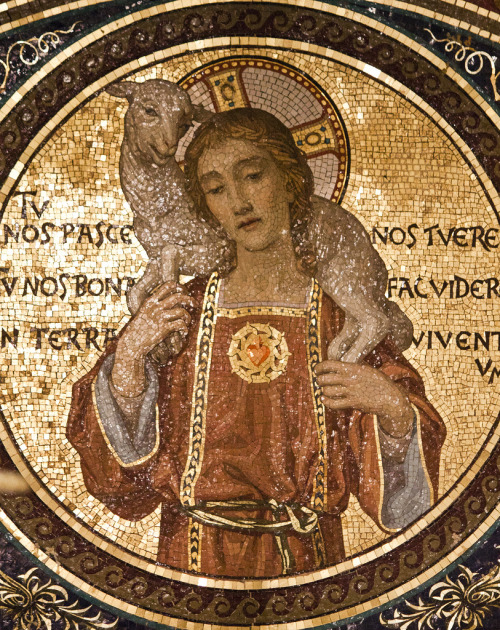
Well, we're back at seminary and starting a new and exciting year! It's wonderful having nearly 60 seminarians in the building; the place has a lively and lived-in feel about it. I'm starting my 5th year at Oscott, and as well as looking forward to diaconate (God/ rector/ bishop if we have one? willing) I am reading in order to get ideas for my final dissertation next year. At the moment I'm reading Ratzinger's Introduction to Christianity which he wrote in 1968. Ratzinger has an amazing knack for hitting the nail on the head. Here is something he says about the God who Jesus reveals to us in the parable of the shepherd who leaves the ninety-nine sheep to go after the one:

"He is not the unfeeling geometry of the universe, neutral justice standing above things undisturbed by a heart and its emotions; he has a heart; he stands there like a person who loves, with all the capriciousness of someone who loves."


In other words, God is not this:


...but this:


Fortunate for us, eh?

Monday, 29 August 2011

EA Seminarians are now in the 21st Century

The East Anglia Seminarians' blog is now available on your phone. The mobile web version should load automatically on your mobile or smartphone instead of the normal web version.

Now you have no excuse not to follow your favourite seminarians all day, every day, except during Mass, of course!

24


In 24 hours, I shall probably be on my way back to Oscott, a day before the start of third year!

Where has all the time gone?

Term begins on Wednesday, with the arrival of all the new students, both those who were formerly students of St Cuthbert's, Ushaw, as well as the first year, many, but by no means all, of whom are joining us from St Alban's, Valladolid. With all these new students, I think the house will number around 56, up from 26 last year (including part-time). The house-list on the website hasn't been updated yet, so I don't know who most of these people are, but then my curiosity will be satisfied in a few days.

Last year, we said 'goodbye' to our three brethren from the Society of the Sacred Heart of Jesus, who are now all ordained and at home in India, but this year, we say 'hello' to three new brethren from the Order of St Augustine, who will be studying philosophy at Oscott.

The Friars Hermits, as they were once called, have a house in Harbourne in Birmingham, which is on the opposite side of the city, near Edgbaston. They are also not strangers to our diocese of East Anglia. The Austin Friars still have a house in Clare in Suffolk, and have pastoral responsibility for that parish. Putting my history-hat on, the Order, both the canons and friars, had several houses in East Anglia before the Protestant Reformation, including Walsingham Priory.

We are also joined by an additional brother from the Society of Divine Vocations, who have made their mark on the Oscott community in the past few years! Two of their existing students are undertaking their extended placement this term, so will not be joining us at college for a few months.

Maybe there are more religious students I have not heard about yet. Not to mention the all the secular students, who are still in the majority!

East Anglia has no new students this year, but there are a number of applications this year, so keep these aspirants in your prayers over this year during their application process.

And please don't stop praying for vocations to the priesthood! 

It is really great news that Oscott has a larger first year than we have seen for a while, and that the propaedeutic seminary in Valladolid is over-subscribed again, and English students will even being going to seminary in Ars this academic year.

It has been a year since the Papal visit, so we are only just seeing the first fruits of that visit in aspirants who are coming forward today. With prayer and a firm conviction, let us all do our part in building a culture of vocations in our parishes, making spiritual sacrifices, and supporting young men who you think may be suitable. Nurture the faith of young people with orthodox Catholicism. Support your parish prayer groups, social groups and youth clubs, and attend exposition of the Blessed Sacrament.

The People of God must consent to the ordination of a priest at his ordination, so the People of God must do their part in helping them from the start. It might seem silly, but don't overestimate the power of the question, "have you ever thought of being a priest?"

Saturday, 27 August 2011

Mass with seminarians

As is now usual, the Pope celebrates the Mass for seminarians during World Youth Day. Madrid was no exception. His homily, as, we know, is normal for our Holy Father, was beautiful and powerful, and it is well-worth reading in full. I hope one day, all of his writings, sermons and speeches will be gathered into a magnum opus!

Until then, a large chunk of his homily from last week appears here below, with some highlights.


Dear friends, you are preparing yourselves to become apostles with Christ and like Christ, and to accompany your fellow men and women along their journey as companions and servants. How should you behave during these years of preparation? First of all, they should be years of interior silence, of unceasing prayer, of constant study and of gradual insertion into the pastoral activity and structures of the Church. A Church which is community and institution, family and mission, the creation of Christ through his Holy Spirit, as well as the result of those of us who shape it through our holiness and our sins. God, who does not hesitate to make of the poor and of sinners his friends and instruments for the redemption of the human race, willed it so. The holiness of the Church is above all the objective holiness of the very person of Christ, of his Gospel and his sacraments, the holiness of that power from on high which enlivens and impels it. We have to be saints so as not to create a contradiction between the sign that we are and the reality that we wish to signify.
Meditate well upon this mystery of the Church, living the years of your formation in deep joy, humbly, clear-mindedly and with radical fidelity to the Gospel, in an affectionate relation to the time spent and the people among whom you live. No one chooses the place or the people to whom he is sent, and every time has its own challenges; but in every age God gives the right grace to face and overcome those challenges with love and realism. That is why, no matter the circumstances in which he finds and however difficult they may be, the priest must grow in all kinds of good works, keeping alive within him the words spoken on his Ordination day, by which he was exhorted to model his life on the mystery of the Lord’s cross.
To be modeled on Christ, dear seminarians, is to be identified ever more closely with him who, for our sake, became servant, priest and victim. To be modeled on him is in fact the task upon which the priest spends his entire life. We already know that it is beyond us and we will not fully succeed but, as St Paul says, we run towards the goal, hoping to reach it (cf. Phil 3:12-14).
That said, Christ the High Priest is also the Good Shepherd who cares for his sheep, even giving his life for them (cf. Jn 10:11). In order to liken yourselves to the Lord in this as well, your heart must mature while in seminary, remaining completely open to the Master. This openness, which is a gift of the Holy Spirit, inspires the decision to live in celibacy for the sake of the kingdom of heaven and, leaving aside the world’s goods, live in austerity of life and sincere obedience, without pretence.
Ask him to let you imitate him in his perfect charity towards all, so that you do not shun the excluded and sinners, but help them convert and return to the right path. Ask him to teach you how to be close to the sick and the poor in simplicity and generosity. Face this challenge without anxiety or mediocrity, but rather as a beautiful way of living our human life in gratuitousness and service, as witnesses of God made man, messengers of the supreme dignity of the human person and therefore its unconditional defenders. Relying on his love, do not be intimidated by surroundings that would exclude God and in which power, wealth and pleasure are frequently the main criteria ruling people’s lives. You may be shunned along with others who propose higher goals or who unmask the false gods before whom many now bow down. That will be the moment when a life deeply rooted in Christ will clearly be seen as something new and it will powerfully attract those who truly search for God, truth and justice.
Under the guidance of your formators, open your hearts to the light of the Lord, to see if this path which demands courage and authenticity is for you. Approach the priesthood only if you are firmly convinced that God is calling you to be his ministers, and if you are completely determined to exercise it in obedience to the Church’s precepts.

So, in summary...

  • Seminary is a time when seminarians prepare themselves to become apostles with Christ and become like Christ, and be with others as companions and servants on their own journeys. 
  • Time in seminary should be spent, primarily in: 
  1. interior silence
  2. unceasing prayer
  3. constant study
  4. gradual insertion into the pastoral and structural life of the Church
  • The Church is shaped by our holiness and our sinfulness, but ultimately, the source of its holiness is the Lord.
  • Priests are living signs of Christ, therefore, priests should strive to be holy themselves. Anything other than this is a sign of contraction, hypocrisy. Seminarians strive towards holiness during their time in seminary.
  • God gives everyone the grace to live their calling; priests should be mindful that their calling is to model themselves on the Lord's cross, and least strive towards that goal.
  • The heart of a seminarian should be open to what the Lord is asking him to do, particularly, in striving to live the Evangelical Counsels (poverty, chastity and obedience) in sincerity.
  • Do not be afraid to unmask the false gods that are worshipped in our society!

Pope Benedict also mentions to things that seminarians (and priests) should avoid absolutely in striving to imitate Christ in his charity towards others:

Anxiety: a subjective 'feeling' and interior disposition whereby persons to worry about uncertain outcomes. This word is being eliminated from the English translation of the Embolism (after the Lord's Prayer) in the new translation of Mass, incidentally, not only because it is an in-appropriate translation and oft-misused word, but Christians have no need to be anxious and without hope, as St Paul says (1 Th 4:12-3). The new translation uses 'distress' instead; all people, including Christians, often feel distressed by external threats, not interior feelings, as modern western society tells us. Our passions should not govern our being, and anxiety, according to this understanding (rather than the psychological condition), is contrary to the Gospel. We are a beacon of hope to others. How can we be that beacon without hope burning within ourselves?

Mediocrity: At the end of the film, Amadeus, Salieri says that there is no place for mediocrity in God's glory, it means to be moderate or not very good. This doesn't mean not being good at doing things. I'm not very good at painting. We know from our Thomisic philosophy, that a being is not defined by what it does, but by what it is. The priest's being in ontologically conformed with Christ, so God doesn't want us to be moderately Christ-like. "...because thou art lukewarm, and neither cold, not hot, I will begin to vomit thee out of my mouth." (Rev 3:16)

Friday, 19 August 2011

Half-way through WYD

I've been following all the goings-on in Madrid via the internet. We can't really watch anything on the secularist state broadcast news, which only seeks to cover a small protest of around a hundred people, never mind the witness to faith of a million young people! Here's a picture of some of them, including our very own seminarians:

Our East Anglian brethren!
Since the arrival of Pope Benedict, I've been reading his speeches, addresses and sermons, and I'll replicate a few segments here. As ever, the Holy Father doesn't shy away from reality, and, I think, much of what he says is particularly relevant for us in Britain, given our recent civil disturbances. His words are always encouraging and inspiring. 


Please take a few moments to read these extracts. I promise you will appreciate it afterwards!

Here's what he said when he arrived in Madrid, addressing the core problems faced by young people, and, indeed, all people, head on.


Many of [these young people] have heard the voice of God, perhaps only as a little whisper, which has led them to search for him more diligently and to share with others the experience of the force which he has in their lives. The discovery of the living God inspires young people and opens their eyes to the challenges of the world in which they live, with its possibilities and limitations. They see the prevailing superficiality, consumerism and hedonism, the widespread banalization of sexuality, the lack of solidarity, the corruption. They know that, without God, it would be hard to confront these challenges and to be truly happy, and thus pouring out their enthusiasm in the attainment of an authentic life. But, with God beside them, they will possess light to walk by and reasons to hope, unrestrained before their highest ideals, which will motivate their generous commitment to build a society where human dignity and true brotherhood are respected. Here on this Day, they have a special opportunity to gather together their aspirations, to share the richness of their cultures and experiences, motivate each other along a journey of faith and life, in which some think they are alone or ignored in their daily existence. But they are not alone. Many people of the same age have the same aspirations and, entrusting themselves completely to Christ, know that they really have a future before them and are not afraid of the decisive commitments which fulfill their entire lives. That is why it gives me great joy to listen to them, pray with them and celebrate the Eucharist with them. World Youth Day brings us a message of hope like a pure and youthful breeze, with rejuvenating scents which fill us with confidence before the future of the Church and the world.
Of course, there is no lack of difficulties. There are tensions and ongoing conflicts all over the world, even to the shedding of blood. Justice and the unique value of the human person are easily surrendered to selfish, material and ideological interests. Nature and the environment, created by God with so much love, are not respected. Moreover, many young people look worriedly to the future, as they search for work, or because they have lost their job or because the one they have is precarious or uncertain. There are others who need help either to avoiddrugs or to recover from their use. There are even some who, because of their faith in Christ, suffer discrimination which leads to contempt and persecution, open or hidden, which they endure in various regions and countries. They are harassed to give him up, depriving them of the signs of his presence in public life, not allowing even the mention of his holy name.
But, with all my heart, I say again to you young people: let nothing and no one take away your peace; do not be ashamed of the Lord. He did not spare himself in becoming one like us and in experiencing our anguish so as to lift it up to God, and in this way he saved us.


Later, in Madrid itself, during a Liturgy of the Word, he delivered a homily on the Gospel of the house build on solid rock, from which the next extract is taken. He speaks here of rooting one's life in Christ, not giving in to the temptations which lead us away from true life.


Indeed, there are many who, creating their own gods, believe they need no roots or foundations other than themselves. They take it upon themselves to decide what is true or not, what is good and evil, what is just and unjust; who should live and who can be sacrificed in the interests of other preferences; leaving each step to chance, with no clear path, letting themselves be led by the whim of each moment. These temptations are always lying in wait. It is important not to give in to them because, in reality, they lead to something so evanescent, like an existence with no horizons, a liberty without God. We, on the other hand, know well that we have been created free, in the image of God, precisely so that we might be in the forefront of the search for truth and goodness, responsible for our actions, not mere blind executives, but creative co-workers in the task of cultivating and beautifying the work of creation. God is looking for a responsible interlocutor, someone who can dialogue with him and love him. Through Christ we can truly succeed and, established in him, we give wings to our freedom. Is this not the great reason for our joy? Isn’t this the firm ground upon which to build the civilization of love and life, capable of humanizing all of us? 
Dear friends: be prudent and wise, build your lives upon the firm foundation which is Christ. This wisdom and prudence will guide your steps, nothing will make you fear and peace will reign in your hearts. Then you will be blessed and happy and your happiness will influence others. They will wonder what the secret of your life is and they will discover that the rock which underpins the entire building and upon which rests your whole existence is the very person of Christ, your friend, brother and Lord, the Son of God incarnate, who gives meaning to all the universe. 
He died for us all, rising that we might have life, and now, from the throne of the Father, he accompanies all men and women, watching continually over each one of us.

Finally, this evening, during a celebration of the Way of the Cross. He spoke of suffering, and said:

As we were making our way with Jesus towards the place of his sacrifice on Mount Calvary, the words of Saint Paul came to mind: “Christ loved me and gave himself for me” (Gal 2:20). In the face of such disinterested love, we find ourselves asking, filled with wonder and gratitude: What can we do for him? What response shall we give him? Saint John puts it succinctly: “By this we know love, that he laid down his life for us; and we ought to lay down our lives for the brethren” (1 Jn 3:16). Christ’s passion urges us to take upon our own shoulders the sufferings of the world, in the certainty that God is not distant or far removed from man and his troubles. On the contrary, he became one of us “in order to suffer with man in an utterly real way — in flesh and blood … hence in all human suffering we are joined by one who experiences and carries that suffering with us; hence con-solatio is present in all suffering, the consolation of God’s compassionate love — and so the star of hope rises” (Spe Salvi, 39).
Dear young friends, may Christ’s love for us increase your joy and encourage you to go in search of those less fortunate. You are open to the idea of sharing your lives with others, so be sure not to pass by on the other side in the face of human suffering, for it is here that God expects you to give of your very best: your capacity for love and compassion. The different forms of suffering that have unfolded before our eyes in the course of this Way of the Cross are the Lord’s way of summoning us to spend our lives following in his footsteps and becoming signs of his consolation and salvation. “To suffer with the other and for others; to suffer for the sake of truth and justice; to suffer out of love and in order to become a person who truly loves — these are fundamental elements of humanity, and to abandon them would destroy man himself” (ibid.).
Let us eagerly welcome these teachings and put them into practice. Let us look upon Christ, hanging on the harsh wood of the Cross, and let us ask him to teach us this mysterious wisdom of the Cross, by which man lives. The Cross was not a sign of failure, but an expression of self-giving in love that extends even to the supreme sacrifice of one’s life. The Father wanted to show his love for us through the embrace of his crucified Son: crucified out of love. The Cross, by its shape and its meaning, represents this love of both the Father and the Son for men. Here we recognize the icon of supreme love, which teaches us to love what God loves and in the way that he loves: this is the Good News that gives hope to the world.
Let us turn our gaze now to the Virgin Mary, who was given to us on Calvary to be our Mother, and let us ask her to sustain us with her loving protection along the path of life, particularly when we pass through the night of suffering, so that we may be able to remain steadfast, as she did, at the foot of the Cross.