Sunday, 31 March 2013

Christus Surrexit! Alleluia!

It's not every day I get a text message from a friend saying, "Χριστός Ανέστη!"

That is Greek. In Latin it would be "Christus surrexit!" In our mother tongue it is, "Christ is risen!" Last night I had the great privilege of singing the Easter Exultet, in which is sung the great joy of the night when Christ rose from the dead, conquered death, and turned the sin of Adam into a "happy fault". In the Gospels, the women run from the empty tomb to the apostles in "fear and great joy".

May our Easter celebration be marked by wonder and joy at the grace which God gives to us afresh at this time. Let us run to him!

Friday, 29 March 2013

Holy Week


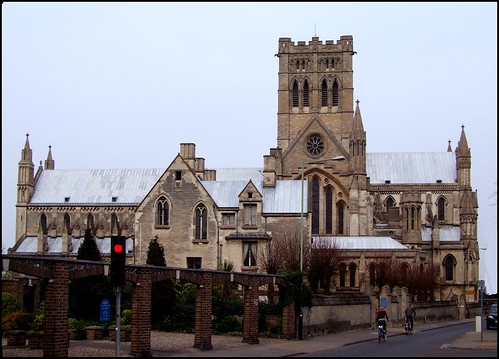
It was great for me to travel back to Norwich on Wednesday evening for the diocesan Chrism Mass. There was a full cathedral to welcome the Papal Nuncio who presided at the Mass. Fr David joked that since we had the Cardinal last year, and the Pope's representative this year, then if we don't have a bishop next year we should have the Pope preside! The Nuncio was very gracious and spoke about - among other things - the role of the bishop leading us in worship and contemplation of God. I enjoyed seeing parishioners from placements I've had, and the priests and deacons of the diocese. I was also privileged to bring up the Oil of Chrism with which I will be anointed on the day of my priestly ordination in July.

Now the Triduum is under way. Yesterday we celebrated the Mass of the Lord's Supper in the parish where I am placed, and this afternoon I will be assisting the priest in the celebration of the Lord's Passion. That means narrating the Passion narrative, singing the introduction to the Universal Prayers of the Faithful, and bringing in the Cross for verneration, singing "Behold the wood of the Cross, on which hung the salvation of the world." The whole congregation well sing in response, "Come let us adore!"


Monday, 25 March 2013

White Palm Sunday!?


Yesterday I was in my weekly placement parish, and the parish priest had decided we were going to have a procession for the first time (recently, anyway) in the parish, come hell or highwater... or snow! We started in the school hall at 10.30, and after the introduction, blessing and sprinkling of palms, and Gospel, we processed briskly through the falling snow towards the church. The First Communion kids stood either side of the church doors, waving their palms wildly as the servers entered, and I couldn't help thinking they were waving them not only in accordance with the liturgical occassion, but also to keep warm!
 
I guess this isn't a scenario we had covered in Sacramental Celebration class!

Thursday, 14 March 2013

Francis our Pope


Habemus Papam!

Yesterday the seminarians were flicking between Sky News, the BBC, and EWTN for coverage of the smoke at 5.30 pm. I realised that it was the first likely chance that we would have a pope, and had been saying so to the Missionaries of Charity down the road (who have to go to a neighbour's house to watch any TV!). As it got closer to 6 pm, the few seminarians in the Common Room began to think something was up, and when the smoke finally appeared there were a few suspenseful seconds until we realised it was white - then someone ran off to ring the chapel bell and alert the community!

Over the next hour, more of the seminarians and staff priests gathered in the Common Room, and the atmosphere was buzzing. Who could it be? What name would they take?

When the new Pope was announced, no one in the room seemed to know who he was! Who's Bergoglio? Where is he from? And we caught from the latin that his papal name would be Francis. A new name! How exciting!

I won't go into a biography of Pope Francis, as I still am learning, and I'm sure people know who he is from the news. First from the Americas, first Jesuit. Suffice to say that his simple, integral lifestyle is encouraging, and already a great witness to the world and a model for priests and seminarians. Authentic renewal in the Church begins with ourselves! I like what I've heard about his contravening security conventions to talk with the ordinary people of Rome and go check out of the hotel he's been staying in since he arrived in Rome!

Next week we have a silent retreat, but I'm sure things will be arranged so that we can watch the Pope's installation on Tuesday...

Tuesday, 12 March 2013

Visit from the Parish

Last Sunday we had a Visitors Sunday afternoon, when the public can have a tour of the seminary and ask questions about priestly formation. It was a privilege for me to welcome my parish priest Fr Philip Shryane and some of the parishioners of my home parish of St Edmund, Bury St Edmunds. They hired a minibus and managed to make good time to be here at Oscott for tea, a tour, and Sung Evening Prayer afterwards. I enjoyed the afternoon, and they appeared to do so also! The next Visitor's Sunday is April 28th, which is already booked up, and I look forward to another East Anglia visit, from Fr Sean Connolly and the parishioners of March and Wisbech...

Sunday, 10 March 2013

House Group Mass

Laetare! Rejoice! We're halfway through Lent...

One aspect of community life at seminary is House Groups. Once a fortnight, we meet in small inter-year groups with a member of staff in order to pray, discuss issues in the community, and socialise. On Friday, we all went of for our termly House Group Masses, and my group trecked all the way to Stone, a market town in Staffordshire where Blessed Dominic Barberi ministered in the 1840's. The Italian Passionist was reviled by the townspeople initially, but eventually won them over through his gentleness, humility and perseverance, and a small chapel was built for the resident Catholic community. We were able to have Mass there, and also to sit in the chair where Blessed Dominic heard confessions!

It is well worth reading about this amazing priest who later received Newman into the Church. I recommend the CTS pamphlet by Fr Ben Lodge, or the older, very good book by Alfred Wilson.


And of course, Happy Mothers Day to all mother out there! Not long ago the Congregation for Clergy wrote a letter thanking the mothers of seminarians for forming their sons and generously giving them to the Church. Without mothers we wouldn't be here! For that reason, let's pray for the success of the Pro-Life march in Birmingham this afternoon, which is expecting great numbers of people from all over the country and beyond...

Thursday, 28 February 2013

We'll miss you Holy Father (...erm, Emeritus)!

Well, in ten minutes the Universal Church will be sede vacante. It was very surreal watching Pope Benedict leave the Vatican, with the Swiss guards, curia, and various well-wishers there to send him off with their gratitude. There were even groups of people on the rooftops of Rome to catch a glimpse of the helicopter as it circled the city on its way to Castle Gandolfo.

I was struck by his words in his last audience yesterday:

I always knew that the Lord is in the barque [Peter's boat on the sea of Galilee], that the barque of the Church is not mine, not ours, but His – and He shall not let her sink. It is He, who steers her: to be sure, he does so also through men of His choosing, for He desired that it be so. This was and is a certainty that nothing can tarnish. It is for this reason, that today my heart is filled with gratitude to God, for never did He leave me or the Church without His consolation, His light, His love.

Thank you once again, Holy Father, for the burden you have carried in Christ's name, and which you still carry as you pray for your successor and our new pope!


Tuesday, 26 February 2013

Transitional deacon, in time of transition!


Well, it's my last half-term before priestly ordination, and therefore my last half-term ever! It certainly is a week of transitions. Not only are we awaiting a new shepherd in the diocese, not only is Pope Benedict on the verge of retirement to a life of prayer and quiet, but Fr Mark, the rector of Oscott, finished his 12 year stint in seminary on Saturday, and when I come back we will have a new rector. I am grateful to Fr Mark for his care of me in these last six years, his willingness to take on new initiatives like public Sunday Evening Prayer, Corpus Christi processions and 40 hours devotion, as well as the three successful Invocation festivals that have been held at the college over the last few summers. May he enjoy his brief respite and his new parish ministry in Wolverhampton! And we welcome Fr David Oakley as the new rector, a priest already known to - and liked by - many of the seminarians. Please pray for him that he will be given the grace to be a good father and companion to the seminary community.

Saturday, 16 February 2013

Ash Wednesday Life Vigil with Archbishop


On Ash Wednesday, Birmingham saw the beginning of its Lenten 40 Days for Life campaign, when men and women, young and old, pray outside the city's abortion clinic during its opening hours of 8 am - 8 pm. The movement, which is happening simultaneously in other national and international cities, aims to address this sidelined issue in our society not through aggression or even primarily debate, but through i) prayer and fasting, ii) peaceful vigil, and iii) community outreach. Archbishop Bernard Longley came to lead the peaceful prayer and witness on Wednesday at 2.30-3.30 pm, and was supported by 30 or 40 others, including some of the seminarians, and some priests of the diocese. As it so happened there was driving snow at that time, and the group of us must have been quite a sight to the passing cars!
 
Please pray that though this grassroots initiative, our society will wake up to the sadness that abortion brings to women, men and children, and that families and relationships may be healed.


Tuesday, 12 February 2013

Thank God for Pope Benedict

Yesterday's news about the Pope resigning has astounded the seminary, and by the look of things, the world.

Once again, we have seen that Pope Benedict is a man of integrity, who cannot be predicted and labeled. Some say he is "theologically conservative", but his works are full of imagination and life, and he sees everything in relation to personal friendship with the Lord. Some say he is authoritarian, yet he has been loathe to lead by force, excercising his papal ministry rather through pointing us gently in the direction of Heaven. Some say he is too shy to be a charismatic leader, yet when he came to England, his obvious warmth and delight was infectious, and people of diverse creeds responded to him in kind.

I am sure many people were thinking the Pope had nothing left to say, and a predictable end could be followed by a predictable obituary. Now once again the Pope has shown his courage and independence of mind, doing something that has not been done by a pope in 600 years. But he has not done it ostentatiously or for show - rather, he is showing as he did when he was first elected that he is merely a humble worker in the Lord's vineyard, and he is pointed us away from himself, to the Lord who gives his gifts to the Church. Like John the Baptist, he is effectively saying, "I must grow less, and he must grow greater".

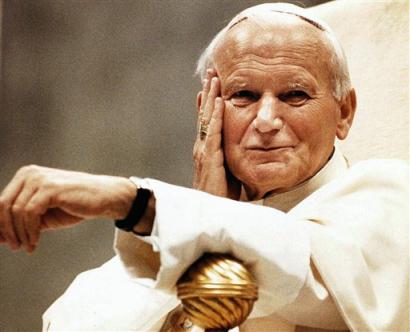
Perhaps people might be confused that he has done this immediately after the papacy of Blessed John Paul II, who made a point of leading until death. Has Pope Benedict's decision undone the significance of that? I don't think so. The two decisions are complementary rather than contradictory. Each has something to say in its own context. John Paul II's suffering and death united him to the Passion and the Cross, themes that marked his public and private (penitential) life as pope. He showed that the Pope is not just a celebrity or a politician. Pope Benedict, by following the dictates of his own conscience, has emphasised the eminently pastoral nature of the papacy. What matters ultimately is not the Church saving face, but the Church saving souls. In that respect, I think his action has a noble stength and poignant beauty.

May he find, in his prayerful retirement, the consolation of the face of Christ for which he has always sought. May the Lord be praised for all he has given to us through Pope Benedict. And may the Lord raise up a worthy successor to him, who will lead with the mind and the heart of the Church.


Monday, 11 February 2013

Oscott in the Snow

Photo


So today we celebrate Our Lady of Lourdes, who revealed herself to St Bernadette as the Immaculate Conception. She is the lady who came into existence free from taint of sin, and white in the burning and undimmed love of God her saviour.

How fitting then that the seminary has been prepared for the day by a flurry of snow!

Thursday, 15 November 2012

Post-Retreat


Last week we had a retreat led by Fr Stephen Wang, the Dean of Studies at Allen Hall seminary in the Archdiocese of Westminster. He gave some excellent reflections. You can have a look at his blog, Bridges and Tangents, where he writes about faith and culture. He is also the chaplain to Youth 2000, which has a prayer festival in Walsingham every August bank holiday, as well as other such events in different locations throughout the year. There is a real emphasis on Adoration and Confession, and the days are well attended by lay movements, religious orders and diocesan priests, who help run workshops and give talks during the events for the young people that are present.

During the retreat I was rereading Pope Benedict's homilies on Priesthood when he was Cardinal Ratzinger. Here are a few things he said that I really liked:

On not procrastinating in vocational discernment:
"There is a moment of Jesus Christ which one cannot put off and calculate and say: 'Yes, I want to all right, but at the moment it is still too risky for me. At the moment I still want to do this and that.' One can miss the moment of one's life, and with prudence gamble away the real worth of one's life never again to be able to recover it."

On priests accepting their weakness:
"[The priest] learns how through him God does great things, through is very weakness, and is full of joy that God has found someone as mean as him worthy of such mercy."

On being a disciple of Christ, who Ratzinger compares to Elijah in his fiery chariot:
"...discipleship demands that we have the courage to stand by is fiery chariot; that we have the courage to be near the fire which he came to cast upon the earth that it might be kindled... we must be ready to be burnt by him, to let ourselves be set on fire, with our hearts burning with the power of his word."

On faith as the most realistic worldview:
"I think we should find this courage once again: to recognise faith as the real objectivity, as the understanding that accepts the world in its true language."

Friday, 26 October 2012

Funeral of Fr Ben

Yesterday was the Funeral Mass of Fr Ben Grist in St John's Cathedral, Norwich. Fr David Bagstaff, the diocesan administrator, presided. The day before, Fr Mark Hackeson presided at the reception of the body and Evening Prayer. It was wonderful that the whole of Oscott seminary, including the domestic staff, were able to get a coach from Birmingham to attend the funeral. And there were many other people there, who knew Ben from various places along his checkered journey. It was good to see his family there, especially his dad and his brothers. Please continue to keep the family in your prayers, as well as Fr Ben himself, that he enjoys now the fulness of the Trinity's glory.  

Sunday, 14 October 2012

Requiesce in Pace, Fr Ben!

Many of you will know about the Ordination of Fr Ben Grist for the diocese on June 30th, after the discovery that he had advanced liver cancer in his third year at seminary. Some of you will also know that he passed away early this morning, peacefully and having been given the Anointing of the Sick. He will be greatly missed in the diocese and by the guys here at the seminary. As Ben himself would be the first to admit, he was always something of a "free spirit", and found it a challenge to adapt to the rules and routines of institutional life! But he was a person of deep piety, with a child-like heart, who knew how to appreciate small graces. He would often be found sitting out under the trees in the seminary grounds, reading a book and taking in the sunshine. With his outgoing personality he was also a great friend and evangeliser of the domestic staff at the college, as well as the doctors and nurses in the hospitals. I think these last months of his illness were a great blessing for him in many ways, as he came to terms with what God was doing in his life, and his new role as a priest in the diocese. When I spoke to him a fortnight ago, he said of his illness: "When you're not in control, God is, and that's a blessing. Everything is a gift".

Please pray for Fr Ben, that he go straight to God. I know I have no authority to presume his eternal state, but I have an unofficial hunch that he will be a great intercessor for our diocese, and I for one will be asking for his prayers in return.

Requiescat in Pace.


Saturday, 13 October 2012

Happy Feast of the Confessor

Happy Feast of St Edward the Confessor!


When I say "Feast" I use that word as it is used in common parlance. Actually, in the English Church, today is a Memorial, which means liturgically-speaking that we don't sing the Gloria at Mass or the Te Deum at the Office of Readings as we would on a "Feast" technically so-called. We only use the prayers proper to him at Mass and the Divine Office.

Or so I thought... I've discovered (or possibly rediscovered since this time last year!) that at some point since the Breviary was published today's celebration appears to have been relegated to an Optional Memorial, meaning the priest can choose whether or not he acknowledges Edward by using his prayers in the liturgy.

Maybe it's just me, but it seems a shame that this national saint-king - the only King of England in fact to be canonised - is not observed with more ceremony! Along with our own East Anglian king St Edmund the Martyr, and Pope St Gregory the Great, St Edward was regarded as the official patron of England until St George was made so in 1351. There seems to be a lot of contention over the issue of whether St Edward was a successful monarch or not. Shortly after his death in 1066, England was conquered by the Normans. But he was apparently loved for his gentle and generous spirit. He avoided starting any wars. He did not enforce the Danegelt (a tax which Viking invaders had periodically demanded from England). He gave willingly to the poor. He loved participating in the liturgy. He built Westminster Abbey (though not as it appears today). Perhaps it was his gentleness that made him prone to pushy opportunitists like the Godwin family. Such was appropriate to his saintly gentleness, but let us not be meek on his behalf and allow him to go unnoticed!

I'm sure our historian confrere Simon could tell us more, and that more accurately, about St Edward. At any rate, let us invoke St Edward's intercession for those in government in our country, that they make decisions not based on superficial motives but out of a real love for what is true, good and beautiful. We can also pray to him, the Confessor, as a model for us in this Year of Faith. He can help us to live our faith in whatever circumstances we find ourselves, great or small.

Thursday, 11 October 2012

The Year of Faith


So it begins! The Year of Faith which the Holy Father has inaugurated on the anniversary of the opening of Vatican II (1962) and the publishing of the subsequent Catechism (1992). It is a year in which he invites us to enter more deeply into the faith, as through a door into our true home:

"The door of faith" (Acts 14: 27) is always open for us, ushering us into the life of communion with God and offering entry into his Church. (Pope Benedict, Apostolic Letter "Porta Fidei", 1) 

Far from being something closed, then, faith is something that opens us to the full panorama of our human horizons, where earth and Heaven touch. For this reason, the Catechism dares to say that

faith is already the beginning of eternal life. (CCC 163)

 In this Year, we are encouraged to renew our faith in two ways:

i) we renew our fundamental act of faith, by which we place our trust in God alone, whose initiative of grace invites this response from us. In this way we imitate Mary, who offered her life to God in complete confidence, thereby loosening the knot of Eve's disobedience (see Lumen Gentium 56).

ii) We turn again to the content of our faith, the fidei depositum. What do we believe? What has God entrusted to us through his Word in Scripture and in the Church's Tradition? Who is Christ? How does God act in human history? How are we saved? What is the Church? What is the purpose of the sacraments? What is the role of the saints? We ponder these questions anew as we reflect on our Creed. Again, we imitate Mary, who pondered in her heart the mystery of her Son, who is the fulness of revelation (Lk 2: 51).

So during this year I for one will be thinking of ways I can renew my confidence in and dependence on God, as well as how I can internalise the mysteries of the faith which God reveals in the Church for our salvation.

There is a Mass in St John's cathedral Norwich today to celebrate the start of this year. Though I cannot be there, I am thinking of and praying for the diocese as we enter into this privileged time!

Friday, 5 October 2012

Popular rock group professes Tridentine anthropology


Yesterday I bought the recently released second album from the alternative, English, folk rock group Mumford & Sons. The album, styled "Babel", was released on the feast day of Our Lady of Walsingham (probably a coincidence), and is the fasting selling UK album of 2012. In their first song their singer makes clear where they stand on the Reformation shibboleth of "sola gratia" ("grace alone"). Mr Mumford sings repeatedly: "I believe in grace and choice!"    

OK, perhap he just thought it sounded nice, and it happens to rhyme with the previous line. But funnily enough, this is exactly what the Council of Trent had to say on the issue.


In response to the Lutheran claim that our human nature is completely corrupt and our good works make no difference to our salvation because we are saved through grace alone, Trent said in its Decree on Justification in 1547:

"Those who through their sin were turned away from God, awakened and assisted by his grace, are disposed to turn to their own justification by freely assenting to and cooperating with that grace".

This two-fold profession of God's grace and our free assent is only a recognition of what is in Scripture, to which Trent refers:

"...When it is said in Sacred Scripture: 'Return to  me and I will return to you" [Zech 1: 3], we are reminded of our freedom; but when we reply: 'Restore us to thyself, O Lord, that we may be restored' [Lam : 21], we acknowledge that God's grace precedes us."

In other words, our salvation is the work of God's grace, without which we can do nothing; but we play an active part in cooperating with that grace. This is an optimistic understanding of the human person, acknowledging that our nature is good because created by God, even if it is damaged by sin. We are in the image of God because we are what Blessed John Paul II called self-determining beings, that is, on a human level we determine who we are by the way we choose to live and the habits we form. God's grace enables us to do this.


Choice, by the way, is actually a lesser, earthly type of freedom. In heaven the saints will not choose to love God, they simply will love him, because they have attained that higher freedom in which they participate effortlessly in the glory of the Trinity. 


So thank you Mr Mumford for recalling us to our Catholic anthropology.

Sunday, 30 September 2012

Faith, Food & Fun (ie. Blessing of Beer)

I went to the baptism of the baby of some friends of mine today as the godfather, and after a beautiful ceremony we moved next door to the reception, where the the father asked me to bless the beer. Believe it or not there is such a blessing! Perhaps it seems a trivial thing to do. Of course it is not a patch on the mystical incorporation into the Trinitarian life that the baby received in baptism. But I think it highlights the truism that the Christian faith is something that engages the totality of human existence. By sanctifying the culinary dimension, the Church makes her home in our home. It reminds me of the late Bishop Michael advocating "Faith, Food, and Fun"  - perhaps we should change "Food" in this case to "Fermentation"! Moreover, I take my cue from Fiddler on the Roof. When the Rabbi is asked if there is a blessing for a new sewing machine, he says "Of course! There is a blessing for everything!"

Incidentally, the beer was East Anglian...


Friday, 28 September 2012

The Overwhleming Quality of Grace


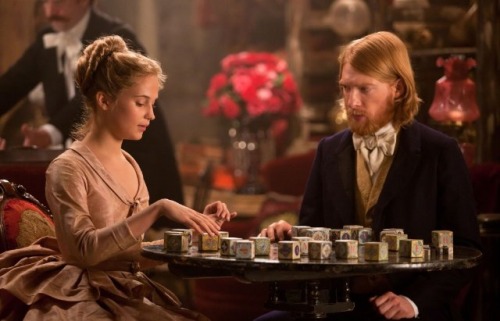
On Wednesday, which is our free day at the seminary, I went to see Anna Karenina with a fellow seminarian. I'm ashamed to say I've never read the book, so I can't say how faithful an interpretation the new film is. While I was disappointed that there were a few unnecessary scenes, by no means fleeting (cue to close eyes!), I liked the way the public and social life of the characters was played out on a stage, but in such a way that it merged with reality. Cleverly done, and quite wonderful I thought. The selfishness of Anna, the title character, and her lover Alexei was fairly depressing. In their infantile infatuation with one another, all sense of commitment was thrown to the winds, even to the point that Anna spurned the near-heroic forgiveness and patience of her husband. They sought merely to indulge their own passions, and as a consequence, Anna began to doubt the authenticity of Alexei's love, while Alexei grew bored of Anna's emotional stranglehold on him. This doubt, resentment and disillusionment is the inevitable result of sin, even if sin presents itself to us in an attractive guise at first. God warns Adam and Eve that the illicit fruit leads to death, and this death is not just physical but spiritual. Sin makes us bored and boring.

Therefore I was moved by the contrasting story of Kitty and Levin. Kitty originally spurns Levin's suit to her in favour of the dashing Alexei, but when Alexei in turn spurns her for Anna, Kitty becomes sick and depressed. Later on in the film, Levin meets Kitty again, when she has learned of her mistake but has no hope that Levin will propose again after the initial slight. Levin is unchanged, however, and when Kitty discovers this from him she becomes tearfully overwhelmed by her happiness and gratitude for his faithful love. Call me a softy, but this was my favourite scene of the film. In contrast to the cynical, possessive love of Anna, who feels she deserves it, Kitty is the one who gratefully receives a love she knows she has not earned. The Cure of Ars said that if the priest knew what he truly was, he would die of love. I think that's the case for grace as well. If we truly realised how unmerited the grace of God is, for us human beings who have countless times spurned it, then we would be helpless with wonder and love in the face of such faithful gratuity. It would overwhelm us.

Monday, 24 September 2012

Happy Feast!


I know it's a bit late, but hope you've had a Happy Feast of Our Lady of Walsingham! I said her litany on behalf of the diocese today...