Sunday, 30 October 2011

Half term is over

Yes, we've been on holiday again. You may have seen one of us this week and wondered why we weren't in seminary!

Thomas Cardinal Wolsey,
Archbishop of York
I've spent some of my holiday in Ipswich, a place which was formerly quite unfamiliar to me! I knew that the old Hanseatic town of Ipswich, or Gippeswick in the historical vernacular, was an important place indeed, and I know lots of stories about Our Lady of Ipswich (who, unlike Our Lady of Walsingham, was spared the iconoclasm), Cardinal Wolsey, and what not, and was pleasantly surprised to see much of the town centre preserved. I'd always, mistakenly, assumed that Ipswich, being so important, must have been destroyed in the war, but the quaint street and timber-framed building survived, complemented by modern renovations around the water-front area. One could even call it the hidden gem of our diocese.

I tried to visit some of the Catholic parishes in Ipswich during my stay, and I managed to meet some parishioners at St Mark's and its quaint and friendly out-lying church, Holy Family, in Brantham. I also had a peep in St James, St Mary (which, I've since discovered, is dedicated as Jesus Christ and Saint Mary), and St Pancras in the town centre, which is a beautiful church indeed, though a little scaffolding remained from the finishing-touches of its renovation. Unfortunately, I didn't get to visit St Mary Magdalen, though I've been there before, or any of the other 'station' churches, nor Woodbridge, which is also in the Ipswich deanery.

I always enjoy visiting parishes in our diocese, not only for my penchant for architecture (surely a veritable curse cast upon all priests upon their entering seminary: one just can't help but mentally re-arrange even the most beautiful of churches!), but it is always a good thing to 'plug back in' to East Anglian life now and then, to remind ourselves of reality!

I wonder which town will await me next holiday...!

Monday, 17 October 2011

T: -1 to the College Feast!

Sedes Sapientiae window,
Glancy Library, Oscott
In Oscott tomorrow, we celebrate the internal solemnity of Our Lady Seat of Wisdom.

The College Chapel is dedicated to the Blessed Virgin, whose principal feast, as we all know, is 15 August. Being in the summer holidays, it has become College tradition to celebrate an internal solemnity on the second or third Tuesday in October.

So tonight, we shall celebrate first vespers of Our Lady, and, East Anglia has a special treat this evening, for our new vocations director, Father John Warrington, is making his first visitation to the seminary.

Saturday, 8 October 2011

New blog for Oscott

A student has started a new blog for the college, which will, for the time being at least, last throughout this year. Each student shall write a post for every week in the year (hopefully!), so do follow this exciting new venture....

http://oscottcollege.wordpress.com/

Friday, 7 October 2011

House groups and Our Lady

Katherine of Aragon, 1485-1536
Queen of England, 1509-1536
I'm a little annoyed with myself. The house is divided into small groups of about 8, presided over by a member of the formation staff, to meet for prayer and social activity, every other Friday night. Tonight is one of those nights, and, in our group, we are going to meet to say the Rosary together, and then each of us will share a little on a shrine in our diocese.

I was tempted to talk a little about Katherine of Aragon, who died in my parish, Buckden St Neots, and is buried in the Anglican cathedral in Peterborough, formerly St Peter's abbey, now in the parish of St Peter and All Souls and Our Lady of Lourdes. But then I remembered that it is not technically a shrine, because there is no official cause for canonisation...yet, though I'm sure there are many praying for it (I know of at least one!). You can visit Queen Katherine in Peterborough Cathedral, and there is no cost upon entry; many obviously do, and her tomb is often decorated with flowers and pomegranates placed there by holy souls.

Anyway, a while ago, I wrote a short article in a magazine about the shrine of Our Lady of Walsingham, and, finally, the reason why I am annoyed is because I cannot find my copy of said magazine! I was hoping to read it to the group, but instead, I have a fine little publication compiled by Tim McDonald, the shrine manager, to commemorate the centenary of the shrine in 1997. It is a little souvenir, a collection of news articles and postcards, I earned while I volunteered as assistant sacristan in summer 2009, and so I'm glad it will come in handy today!

Thursday, 6 October 2011

Treasures of Heaven

Elisha died, and they buried him. Now bands of Moabites used to invade the land in the spring of the year. And as a man was being buried, behold, a marauding band was seen and the man was cast into the grave of Elisha; and as soon as the man touched the bones of Elisha, he revived, and stood on his feet. (2 Kings 13:20-21) 
A woman had heard the reports about Jesus, and came up behind him in the crowd and touched his garment. For she said, "If I touch even his garments, I shall be made well." And immediately the haemorrhage ceased; and she felt in her body that she was healed of her illness. (Mark 5: 27-29; cf Luke 8: 43-48)
God did extraordinary miracles by he hands of Paul, so that handkerchiefs or aprons were carried away from his body to the sick, and diseases left them and the evil spirits came out of them. (Acts 19: 11-12)

Reliquary containing a Holy Thorn,
and depicting the Last Judgement.
14th century French
As it is good to get far away from the seminary on our days off, yesterday, I went to London to visit the Treasures of Heaven exhibition in the British Museum, just before it closes this weekend. There displayed are a variety of reliquaries, and associated items, from the early Church to the Reformation, tracing the ancient cultic devotion of the early martyrs, to the discovery of the true Cross by St Helena in the 4th century, to the excesses of the late mediaeval period. As we can see through these three passages from scripture, however, our understanding in 'relics' goes back much further than that.

Many of the reliquaries were empty, but all, of course, are still holy objects, made so by their use (including a whole ancient stone altar, with little stone-carved rouched curtains to allow the faithful to venerate the relics underneath it!), but some of the reliquaries still contained their original contents, including many pieces of the True Cross, and splinters from Christ's crown of thorns, a piece of St Thomas of Canterbury's skull, and clothing taken from St Cuthbert's tomb in the 19th century. I didn't know whether I should be viewing them as museum pieces, or incensing them with a smuggled-in thurible! Needless to say, I'm glad I didn't go on the feast of the Exultation of the Holy Cross, as my scruples would have required me to genuflect at every-other display-case!

The museum was quite sensitive to the reality that some of those viewing the exhibition would regard these items as sacred objects: there were conveniently placed benches in front of particularly important displays, such as a cabinet of True Crosses and the Mandylion of Christ on loan from the Vatican. I was moved to notice several people clearly spending a few moments in prayer before these precious things, and I said a few prayers myself, including asking for St Thomas' intercession for our seminary year. Just think of all those millions of holy souls who have found comfort and received graces through these items, and it continues still! The museum also gave a (brief) mention to the visit of St Therese's relics to this country in 2009; the outpouring of faith and devotion surprised many secularists, if you remember. It's important to remember that our faith, the faith of our fathers, is a living faith, not one of the history books. All these people we learn about in history are real people, like us, not fiction. We dump our heritage at a great price, a peril to our souls, just for the sake of pursing the zeitgeist; there is nothing new under the sun, after all.

Fittingly, for this blog at least, there was also an account of the life of St Edmund, 12th century, written in English, with little illustrations, though, being a book, only two pages were open at one time; I saw a little scene of a monk in prayer at his tomb in Bury St Edmunds, a shrine now lost thanks to vandals and their error. I wonder whether our descendants will think similar such things at the violence which has been committed in some of our own sacred spaces.

Unfortunately, the exhibition closes this weekend, so you may have missed it already, but those who have visited, I hope you enjoyed it as much as I did. As is usually my wont for such exhibitions and galleries, I bought the big picture book for my coffee-table in my cell to keep me and my lucky guests entertained for a few minutes.

Saturday, 1 October 2011

October devotions and little flowers

Like the rest of the country, Oscott's been roasting of late. I live on the front of St Bede's (the south-facing façade of the house), and the sun has been pouring in through the windows, so it is especially oven-like. If we leave the windows and doors open though, the breeze is quite cooling! Someone must have heard our complaining, though, as we didn't have any hot water this morning: cold showers all round.

Today is the first day of October, which is a month dedicated to Our Lady, particularly, our devotion to her in the holy Rosary. The Council of Trent ordered that October be given this dedication in particular for priests and seminarians (a new creature in that century!) could re-dedicate themselves to their heavenly Mother.

As is our Catholic tradition this month, as well as May, today, after lunch, Father Rector solemnly crowned the statue of Our Lady in the back cloister, outside the Northcote Hall.

The veneration of Mary is the surest and shortest way to get close to Christ in a concrete way. In meditating on her life in all its phases we learn what i means to live for and with Christ - in the everyday, in an unsentimental matter-of-factness that nonetheless enjoys perfect inner intimacy. Contemplating Mary's existence, we also submit to the darkness that is imposed on our faith, yet we learn how we must always be ready when Jesus suddenly asks something of us. (Balthasar)
Our Lady is an object of our veneration because she points us to Christ; by becoming like Him through the sacrament of baptism, we become, like him, Sons of the Father, through the grace of adoption. That requires trust, and a lot of it! Mary is our greatest model for trust, and, like her, so is St Teresa of the Child Jesus and the Holy Face, who feast it is today.

Several of the community have been praying a novena in preparation for her feast day today. Our meditation for day seven of the novena was the spiritual fruit of trustfulness. St Therese's last words in her autobiography read, 'I lift myself to him by trust and love'. In her dark night, she says with Job, 'though He should kill me, yet will I trust in him.' We strive as Christians to abandon ourselves completely, in our own ways, to the Lord. St Therese is known as the 'Little Flower'; not a beautiful rose, or other-such glorious bloom, but a little flower in the crag of a cliff, clinging to the rock for life, lest it be blown away by the tempest.

As Pope Benedict said to the German seminarians last week:

Even for my own generation, it was not exactly easy to imagine how many decades God might assign to me, and how different the world might become. Will I be able to hold firm with him, as I have promised to do? ... It is a question that demands the testing of the vocation, but then also – the more I recognize that he does indeed want me – it demands trust: if he wants me, then he will also hold me, he will be there in the hour of temptation, in the hour of need, and he will send people to me, he will show me the path, he will hold me. And faithfulness is possible, because he is always there, because he is yesterday, today and tomorrow, because he belongs not only to this time, but he is the future and he can support us at all time.

Tuesday, 27 September 2011

To the German seminarians...


Pope Benedict, who concluded a 4-day journey to Germany last Sunday, spoke, before he departed, to the country's seminarians. His speech, which was not written down, but later recorded and translated by the Vatican has just been published, and can be found here.

Here's a little excerpt:

In considering the question -- What is the seminary for? What does this time mean? -- I am always particularly struck by the account that St. Mark gives of the birth of the apostolic community in the third chapter of his Gospel. Mark says: "And he appointed twelve". He makes something, he does something, it is a creative act; and he made them, "to be with him, and to be sent out to preach" (Mk 12:14). That is a twofold purpose, which in many respects seems contradictory. "To be with him": they are to be with him, in order to come to know him, to hear what he says, to be formed by him; they are to go with him, to accompany him on his path, surrounding him and following him. But at the same time they are to be envoys who go out, who take with them what they have learnt, who bring it to others who are also on a journey -- into the margins, into the wide open spaces, even into places far removed from him. And yet this paradox holds together: if they are truly with him, then they are also always journeying towards others, they are searching for the lost sheep; they go out, they must pass on what they have found, they must make it known, they must become envoys. And conversely, if they want to be good envoys, then they must always be with him. As St. Bonaventure once said: the angels, wherever they go, however far away, always move within the inner being of God. This is also the case here: as priests we must go out onto the many different streets, where we find people whom we should invite to his wedding feast. But we can only do this if in the process we always remain with him. And learning this: this combination of, on the one hand, going out on mission, and on the other hand being with him, remaining with him, is -- I believe -- precisely what we have to learn in the seminary. The right way of remaining with him, becoming deeply rooted in him -- being more and more with him, knowing him more and more, being more and more inseparable from him -- and at the same time going out more and more, bringing the message, passing it on, not keeping it to ourselves, but bringing the word to those who are far away and who nevertheless, as God’s creatures and as people loved by Christ, all have a longing for him in their hearts.


There are lost of worthwhile things to read from this apostolic journey, so please, if you can, take some time and have a peek. 

Germany was evangelised by a great Englishman, St Boniface, who is a great model of a bishop for our times too. The Church in our country is in a relatively good position, so we must always keep praying for the churches in countries such as Germany, which are facing a much tougher time than we are at the moment.

Saturday, 24 September 2011

Happy feast!

Well, it's only been 13 days since our last post, but today, in East Anglia, we keep the feast of Our Lady of Walsingham. Here in the archdiocese of Birmingham, however, it is only a memorial, and so we missed out on the 'proper' offices of Our Lady, and cannot even sing the Te Deum at the office of readings!

Still, now that our weekly 'Rosary rota' here in Oscott is a sign-up list (every Saturday, we say the Rosary together after lunch), and so an East Anglian seminarian managed to take the reigns today, and, as well as praying for the Pope, our normal prayer intention for the Rosary, we gave thanks for her shrine and the priests, brothers and staff who look after it and the pilgrims. We also prayed that the Lord made speed to send us a new bishop in East Anglia.

Fr Stephen Billington, our new philosophy lecturer, preached an excellent homily at Mass today for the feast, and spoke of a priest's essential filial relationship and devotion to Our Lady, through the Rosary, and other prayers and devotions, such as the consecration to Our Lady of St Louis de Montfort.

Ben has travelled up to Walsingham today to celebrate the feast there, so we hope to hear more from him upon his return. Henry will be preaching this evening at First Vespers of Sunday, as is our custom for 5th years, so remember to keep him and his year in your prayers! My year will start preaching (well, giving reflections), at weekday Masses after half-term.

We'd like to wish a happy feast to everybody in East Anglia, and the national shrine of Our Lady in Walsingham. Oremus pro invicem!

"The more the Holy Ghost finds Mary, His dear and inseparable spouse, in any soul, the more active and mighty He becomes in producing Jesus Christ in that soul, and that soul in Jesus Christ." - St Louis de Montfort

Friday, 9 September 2011

Change and continuity

We have nearly finished the first week of our academic year. Henry, in year 5, is starting '3rd theology', and Ben and I, '1st theology'.

Even those already in the house have been getting used to all the changes at Oscott, which, as you know, has expanded to 59 seminarians this year, as well as 10 residential and 3 non-residential formation staff; the refectory and chapel are very busy and noisy these days!

St Gregory's, Stratford
Last week, for a little 'community bonding', our house groups (we are divided into small cross-house house groups) travelled to different local places to spend some time with each other, and celebrate vespers.

My house group travelled to Stratford-upon-Avon, the hometown of William Shakespeare, and a very quaint English town, if full of rather a lot of tourists! As well as visiting the very fine Anglican church of the Holy Trinity, the burial-place of Shakespeare, as well as boasting a rare pre-reformation stone high altar, we visited the Catholic Church of St Gregory the Great, and there celebrated first vespers of his feast, which was last week.

The following Sunday, Archbishop Longley visited the college overnight, and celebrated solemn second vespers, as well as the community Mass on Monday. Also on that Sunday, Our Lady and the English Martyrs, in Cambridge, was host to the weekly BBC Radio 4 programme, Sunday Worship. Mgr Leeming presided at the first broadcast Mass in the new English translation of the Roman Missal, assisted by the parish choir.

We wouldn't want to over-load you with too much news, so expect more titbits as term progresses!

There are even changes going on in the diocese. Many of the parish moves are happening around now back home in East Anglia, and we shall also be receiving the appointment of a new vocations director very shortly, so let us pray for each other in these transitional weeks. The feast of Our Lady of Walsingham is shortly upon us - always a time to feel a little home-sick!

Collegium Sanctae Mariae de Oscott, MMXI - MMXII

Saturday, 3 September 2011

God is not Geometry

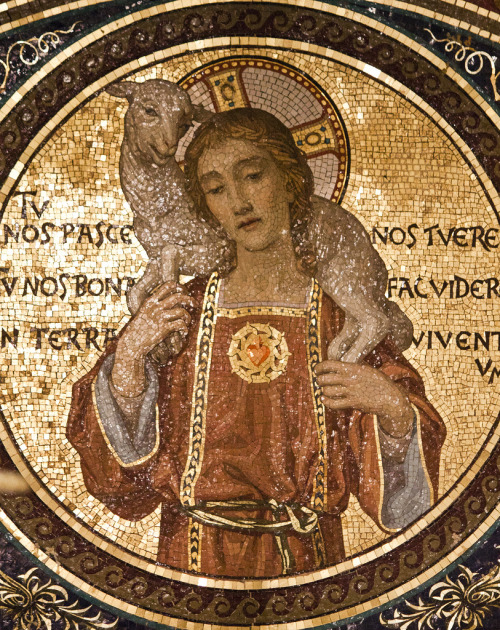
Well, we're back at seminary and starting a new and exciting year! It's wonderful having nearly 60 seminarians in the building; the place has a lively and lived-in feel about it. I'm starting my 5th year at Oscott, and as well as looking forward to diaconate (God/ rector/ bishop if we have one? willing) I am reading in order to get ideas for my final dissertation next year. At the moment I'm reading Ratzinger's Introduction to Christianity which he wrote in 1968. Ratzinger has an amazing knack for hitting the nail on the head. Here is something he says about the God who Jesus reveals to us in the parable of the shepherd who leaves the ninety-nine sheep to go after the one:

"He is not the unfeeling geometry of the universe, neutral justice standing above things undisturbed by a heart and its emotions; he has a heart; he stands there like a person who loves, with all the capriciousness of someone who loves."


In other words, God is not this:


...but this:


Fortunate for us, eh?